01
Front screen and glass
Screen construction, OLED and LCD differences, safe opening, display transfer points, adhesives, alignment and touch/display testing.
Applications now open · Adults aged 18+
Start your phone repair skills this summer with 18 hours of hands-on weekend training in Stanmore/Harrow. Learn practical repair foundations across modern iPhone, iPad and selected Android devices.
A skill you can see, practise and develop
Smartphones change every year. Screens become thinner, housings change, components move, software pairing develops and manufacturers introduce new adhesives, connectors and diagnostic challenges. A technician therefore needs more than a single repair trick: they need a repeatable way to inspect, diagnose, plan, repair, reassemble and test.
This bootcamp introduces that repair mindset through representative iPhone, iPad and selected Android devices. You will learn how model generations differ, why repair methods change, how to research a device before opening it and how to choose an appropriate repair approach.

What you will explore
Across the six workshops, learners build foundations in the most common repair categories. Exact devices and procedures may vary according to parts availability, learner level and safety requirements.
Screen construction, OLED and LCD differences, safe opening, display transfer points, adhesives, alignment and touch/display testing.
Understand back-glass and complete-housing repair routes, preparation, component transfer, wireless-charging considerations and safe finishing.
Battery health symptoms, safe isolation and removal, adhesive handling, replacement principles and post-repair charging checks.
Separate cable, adaptor, contamination, port, battery and board-level symptoms before deciding on cleaning, assembly replacement or referral.
Test cameras, microphones, speakers and earpieces; recognise modular faults, damaged flex cables, obstruction and software-related symptoms.
Safe intake, power isolation, corrosion awareness and triage. Learn when a device should not be powered and when specialist board work is needed.
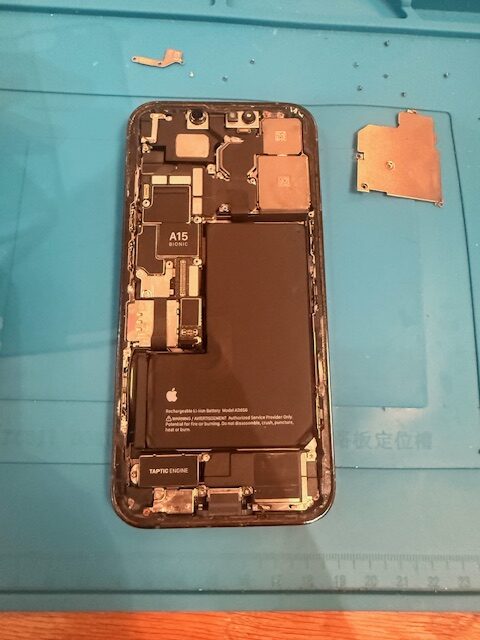


Parts knowledge matters
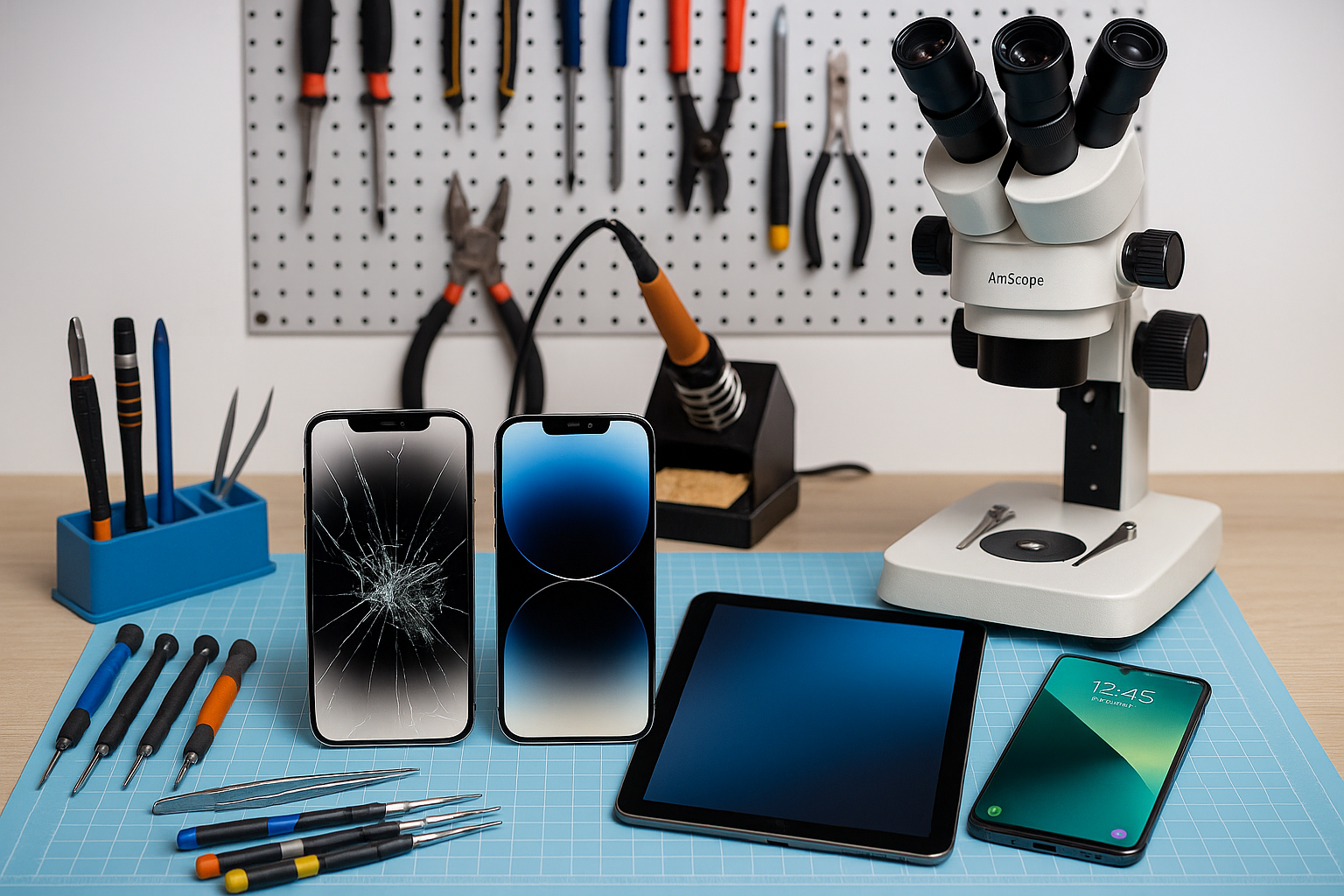
A repair can look successful and still disappoint the customer if the replacement part is wrong for the job. Learners will be introduced to the practical differences between commonly available part grades and why price alone should not drive selection.
Six guided workshops
Each three-hour session combines demonstration, safe supervised practice and questions. The programme is designed as a strong foundation—not a promise of mastery of every device in 18 hours.
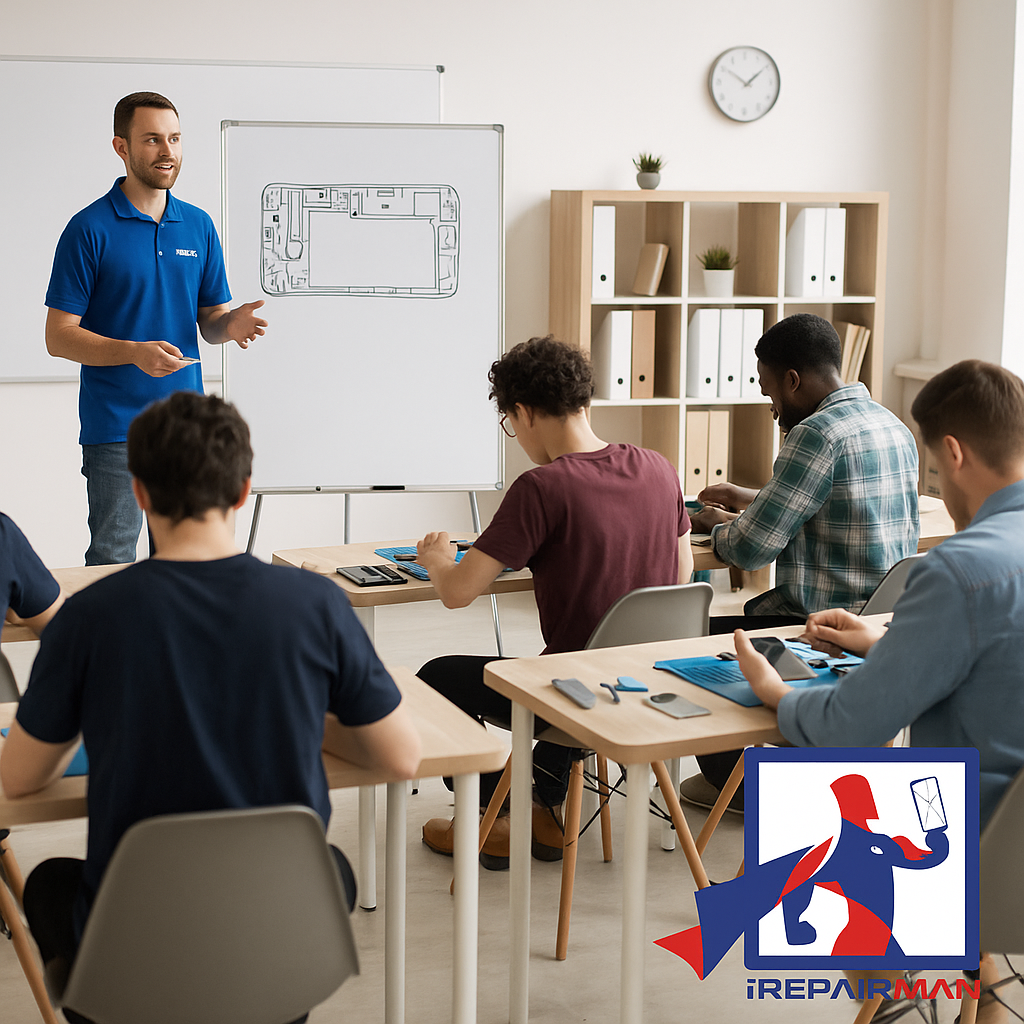
Set up a repair bench, identify components, record condition and work through a structured intake and fault-assessment process.
Compare model construction and practise opening, disconnecting, inspecting, transferring components, aligning and testing.
Build safe battery habits and learn to distinguish common port, power-source, battery and assembly-related faults.
Explore repair routes, disassembly planning, adhesives, transfer sequence and the risks involved in housing-based work.
Test modular functions, recognise common symptoms, assess water exposure safely and compare replacement-part grades.
Diagnose, plan, repair, reassemble, test and document a representative job, followed by next-step guidance.
Practical work in an AI-enabled world
AI is changing research, documentation, customer support and diagnostic workflows, but damaged glass, worn batteries, corroded connectors and failed components still require careful inspection and physical intervention.
Modern technicians can use manuals, repair databases, diagnostics and AI-assisted research to compare symptoms and understand unfamiliar models. The valuable skill is knowing how to verify that information and apply it safely.
Repair knowledge may support personal device maintenance, an additional workplace skill, further technician study, supervised employment or a future service business. Outcomes depend on continued practice, quality, demand and individual effort; income is never guaranteed.
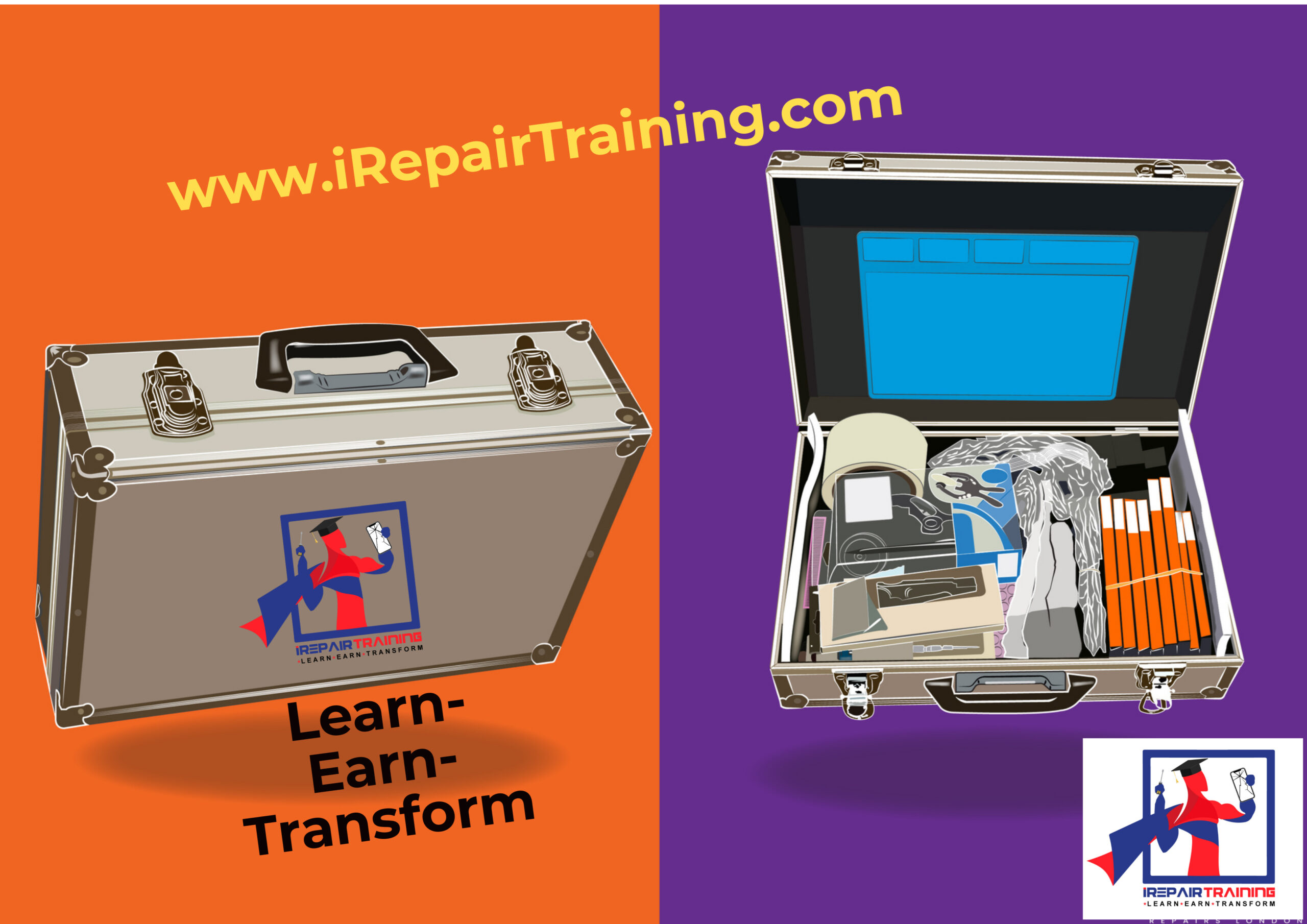
Prepared for your learning
Following acceptance and cleared payment, we prepare a learner kit containing the tools, equipment, practice parts and course content specified in your booking confirmation. It is designed to support the workshop activities and your continued responsible practice after the programme.
Exact kit contents, quantities, brands, models and any machines included will be listed in the booking confirmation and may vary according to availability. Practice parts are not represented as suitable for customer repairs unless expressly stated.
After a successful application, our office will email your acceptance, Booking Terms, invoice and secure bank-transfer instructions. Payment must be received within three days to secure the place and allow us to organise your training kit. Subject to cleared payment, stock and a confirmed UK delivery address, we normally dispatch the kit to your home or workplace for delivery within 3–5 working days. Never pay using bank details from an unexpected message—verify any change through our published contact details.

Meet your instructor
Founder of iRepairman · Instructor at iRepair Training
Maratib Ali Shad is a London-based smartphone and tablet repair professional with experience supporting individuals, professionals, schools and businesses. His work covers common iPhone and iPad faults including screens, batteries, charging problems, cameras and other replaceable components.
Maratib brings a coaching-led approach to training: clear demonstrations, supervised practice and individual feedback. During this bootcamp, he will help learners develop safe bench habits, structured diagnosis, careful component handling, reassembly and testing.
Who should apply?
Use part of the summer to explore a practical technology skill after GCSEs, A Levels or college.
Improve device triage and hardware awareness alongside existing software and user-support responsibilities.
Test your interest in repair through structured practice before deciding on deeper technician training.
Frequently asked questions
No. The programme begins with safe bench setup, tools, device anatomy, intake checks and structured diagnosis.
No course can responsibly promise mastery of every device in 18 hours. You will practise foundational processes using representative devices and learn how to research and approach model changes. Continued practice is essential.
The primary focus is common iPhone and iPad repair foundations, with selected Android devices used to compare construction, diagnosis and repair approaches where appropriate.
The programme provides a practical foundation, not an automatic guarantee of professional competence. Begin with training devices and low-risk supervised practice, and accept customer work only when you can perform it safely, lawfully and to an appropriate standard.
Your booking confirmation will list the tools, equipment, parts and materials included in your personal kit. Exact contents may vary according to availability and the planned cohort activities.
Payment is by bank transfer only after application acceptance. We email an invoice, Booking Terms, booking reference and verified payment instructions. Payment is required within three days to secure the place.
No. Repair can become a useful personal skill, workplace capability, side service or career pathway, but earnings depend on competence, continued practice, pricing, demand, costs and individual effort.
The application form lets you request a private conversation about reasonable adjustments without entering medical information publicly.
A small cohort with a fixed start date
Applications are reviewed personally. If the programme is suitable and a place remains, you will receive the next steps by email. Applying does not require immediate payment and does not reserve a place until acceptance and cleared payment.
Adults aged 18+ · 1–16 August 2026 · Stanmore/Harrow · Six workshops · £625 + VAT